Kids, altitude and health at 10,023 ft
The summit sits about two hours' drive and nearly two miles of height above the beach. Most visitors feel nothing worse than a little breathlessness. Families with small children need a plan for the hours and the cold, and anyone pregnant or with heart or lung trouble should talk to a doctor first. The tours also differ a good deal in whom they will take.
What thin air does to the body
The summit of Haleakalā stands at 10,023 ft (3,055 m), and each breath up there carries roughly a third less oxygen than at sea level. Mountaineers take days to adjust to a change like that. On a sunrise morning you go from the coast to the rim in about two hours, half asleep, with no time to adjust at all.
For most visitors the effect stays mild. Expect to feel winded on a short slope and a little light-headed if you stand up quickly. A dull headache that fades on the way down is common, and some people feel queasy. Serious altitude sickness is uncommon on a visit of an hour or two, but it does happen, and the people most at risk are the groups the park singles out below.
Four habits at the top
- Walk slowly. Steps and short slopes around the rim feel steeper than they look. Stop and breathe whenever you need to;
- Drink water. The air is dry as well as thin, and after a 2 am start most people are already short of fluids;
- Go easy the night before. Alcohol and a short sleep both make a headache at altitude more likely;
- Head down if you feel ill. Going lower is the cure. If a headache keeps building or breathing gets hard, it is time to leave, and on a tour the guide needs to know straight away.
Valley Isle carries an oxygen generator on board its vans, a comfort for anyone nervous about the climb.
Who should ask a doctor first
The National Park Service advises some visitors to talk to a doctor before the drive up, and the tours add rules of their own.
- Scuba divers. Do not go up within 24 hours of a dive, which is the general rule for the park. Polynesian's Viator listing asks for 72 hours, while its GetYourGuide listing says 24. Book your dives after the sunrise morning, not before it;
- Pregnancy. Polynesian's GetYourGuide listing names pregnant women among the guests the tour does not suit, and both Bike Maui tours exclude pregnant riders. The park includes pregnancy in its advice to see a doctor first;
- Heart and breathing problems. The same Polynesian listing rules out people with heart problems or altitude sickness. Valley Isle asks anyone with breathing issues to consult a doctor before booking. The bike tours turn away riders with heart or back trouble;
- Young children. The park's altitude advice covers them too, so mention the trip at any check-up before you fly.
Age limits, tour by tour
| Tour | From | Children | Wheelchairs |
|---|---|---|---|
| Valley Isle (our pick) | ~$264 | From 3, infants on laps per Viator | Wheelchair and stroller accessible |
| Skyline | ~$236 | No minimum stated, bring a child seat for under-4s | ADA vehicles on request |
| Polynesian | ~$236 | From 3, infants on laps per Viator | Accessible, ADA requests 7 days ahead |
| Bike Maui, self-guided | ~$242 | 15 and up, at least 4 ft 10 in | No |
| Bike Maui, guided | ~$275 | 15 and up, at least 4 ft 10 in | No |
Height counts as much as age on the bikes. Riders must stand at least 4 ft 10 in (1.47 m) and stay under the weight limit, and they need recent time on a bicycle. A keen 14-year-old cyclist still has to wait a year.
For a family with a toddler, Haleakala EcoTours' classic van tour at ~$287 takes children from age 1 and lists wheelchair access, with the park entrance and a breakfast in Paia included. The catch is its calendar. West Maui hotels get picked up only on Mondays and Thursdays and South Maui hotels only on Tuesdays and Fridays, so your sunrise has to fit the van's week. The vans are also shared with bike groups, which adds a stop at the bike shop.
Small children and a 2 am start
Haleakala's altitude rarely troubles children as much as the clock does. Valley Isle pickups fall around 2–2:50 am according to reviewers, and Polynesian starts at 2 am in summer or 2:30 am in the cooler months. Skyline's pickups between April and September begin as early as 1:50 am.
Treat the van as a bedroom on wheels. Dress children in warm pajamas under their outer layers and carry them straight from bed to the van, where most fall back asleep on the climb. A small pillow helps, and so does a snack for when they wake at the top hungry and cold.
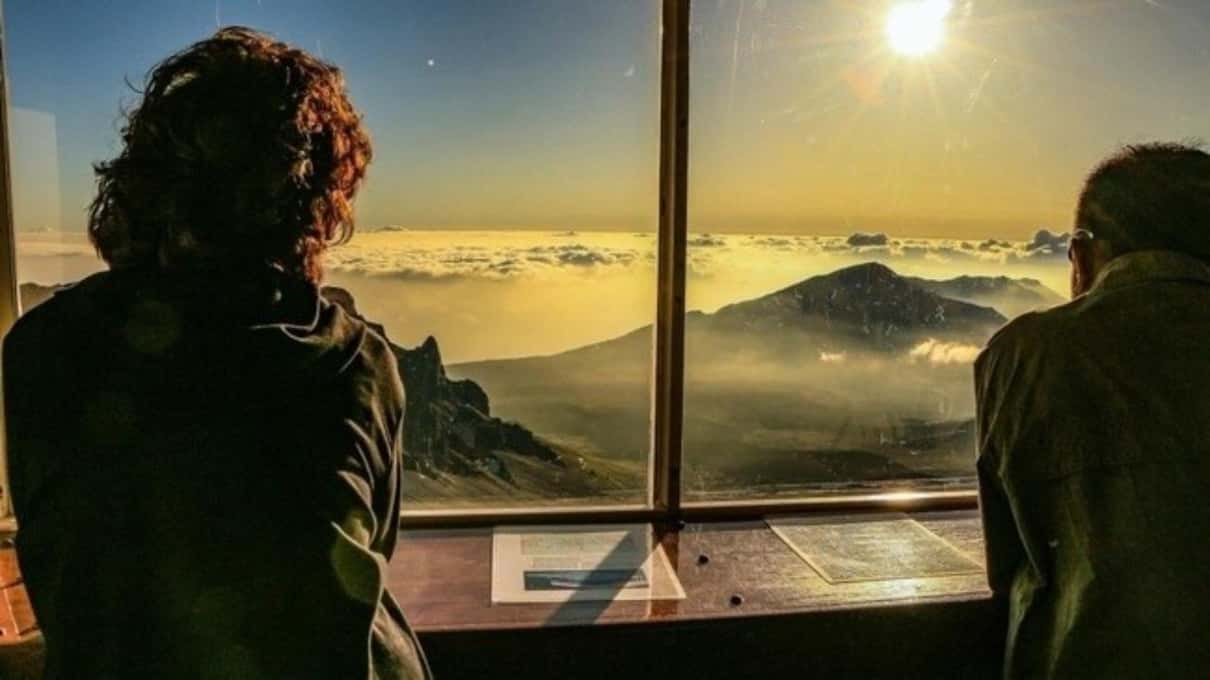
At the rim, small bodies lose heat faster than adult ones. A warm hat and gloves matter most, and a blanket wrapped round a small child does more than another jacket. Valley Isle hands out fleece ponchos at the summit, though reviewers still call the cold sharp. The wait can be long, and Skyline reviewers describe up to two hours in freezing wind. The glassed shelter at Puʻu ʻUlaʻula gives a break from it if there is room inside. Our clothing guide has the full list of layers.
Motion sickness on the switchbacks
The road up Haleakala climbs from sea level through dozens of switchbacks, and in the dark there is no horizon to fix your eyes on. Reviewers warn that anyone prone to car sickness should come prepared, and children tend to feel it first. Reviewers of the cruise-ship version of Valley Isle's sunrise tour mention ginger chews handed round on the way.
- Ask for a seat near the front of the van
- Eat something light and plain before pickup rather than nothing
- Ask a pharmacist about travel-sickness medicine for children, and give it before the van leaves
- Keep a bag within reach for the way down too
A van that carries oxygen
Valley Isle takes children from age 3 and keeps an oxygen generator in the van. Its listing calls the tour wheelchair and stroller accessible. If a child falls ill before the trip, you can still cancel without charge until 24 hours ahead.
Wheelchairs and limited mobility
Three of the five main tours list some form of access. Valley Isle at ~$264 calls its tour wheelchair and stroller accessible. Polynesian at ~$236 lists wheelchair access too and wants ADA requests 7 days ahead. Skyline at ~$236 offers ADA vehicles on request. Neither Bike Maui tour is open to wheelchair users.
The vehicle is only half of it. Thin air makes every walk at the summit harder, even from a parking area to a railing, and the viewing spots are crowded in the dark. Before you book, ask the operator where the van parks and how far that is from the place the group watches sunrise.
Teenagers and grandparents
A 15-year-old who meets the height rule can ride with Bike Maui's self-guided tour at ~$242 and still see the sunrise first. Our bike guide covers what the riding involves.
For grandparents, health matters more than age. None of the van listings sets an upper age limit, although Polynesian's Viator text asks older travelers to check with a doctor. The long wait in the wind is often harder than the altitude. Anyone who would rather skip the 2 am alarm can visit the summit at sunset, with the same thin air but a warmer arrival, and sunrise or sunset compares the two. A family of four pays four tickets, so read what a sunrise tour costs against a rental car before deciding, and our photography guide helps you get the group shot right once you are up there.